Tracing Routes Through Loyalty Levels as Gamers Alternate Between Slot Reels and Live Dealer Formats
Written by Morgan Günther · Jun 9, 2026

Tracing Routes Through Loyalty Levels as Gamers Alternate Between Slot Reels and Live Dealer Formats
Players move through casino loyalty programs by accumulating points from both digital reel games and real-time dealer sessions, yet the pathways differ based on game type and platform rules. Data from multiple operators shows that participants often begin in entry-level tiers after initial deposits, then advance as they log consistent activity across formats. According to figures from the American Gaming Association, cross-format engagement increased notably in early 2026, with many users shifting between slots and live tables within single sessions.
How Tier Structures Operate Across Game Categories
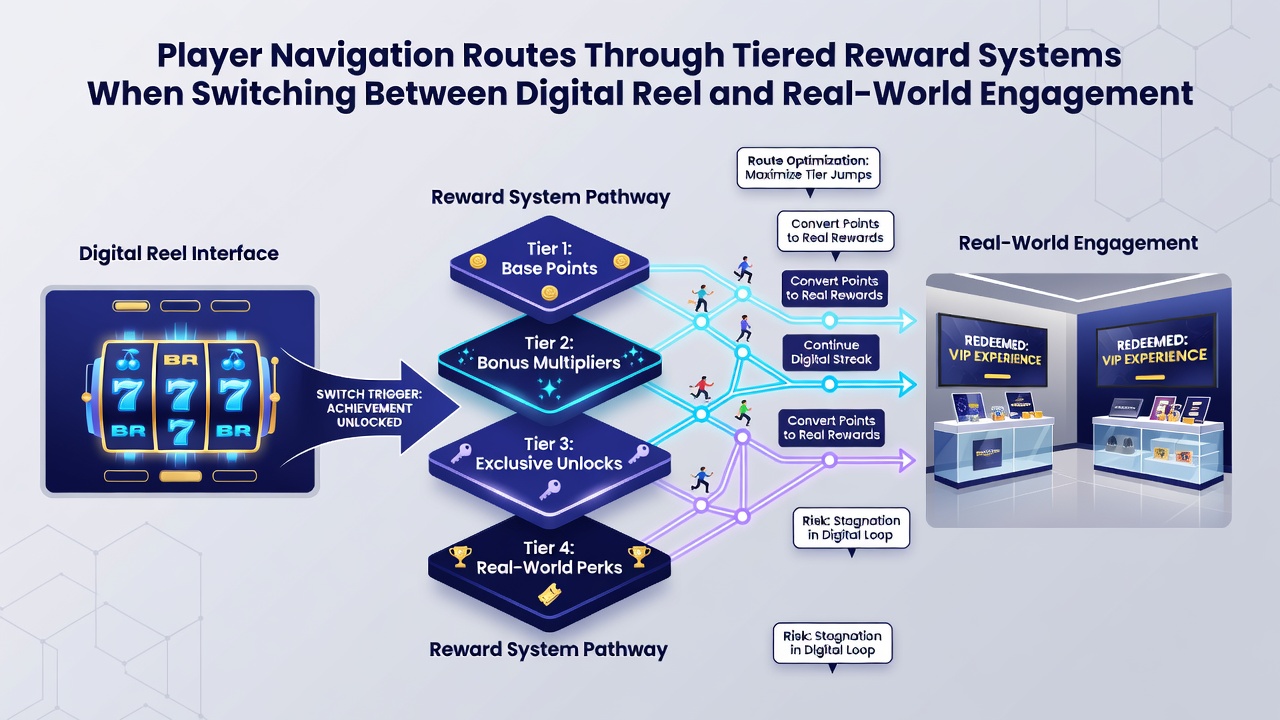
Casino reward systems assign points differently depending on whether activity occurs on digital reels or live dealer tables. Reel-based play typically generates points through spin volume and bet size, while live dealer formats award points based on table time, hand totals, and sometimes side bet participation. Observers note that these calculation methods create distinct navigation patterns, since players must adjust their habits when switching to maintain momentum toward higher tiers. Research from the Australian Gambling Research Centre indicates that mixed-format users reach mid-tier status faster than those who stick to one game type alone.
Advancement criteria usually include deposit thresholds, wagering volumes, and session frequency. When participants switch from reels to live dealer experiences, they encounter altered point multipliers that can either accelerate or slow progress depending on the operator's current structure. Those who've tracked these shifts report that live dealer sessions often carry higher multipliers during promotional windows, which influences route selection for many users.
Common Switching Patterns Observed in 2026
Industry reports reveal that players frequently start sessions on digital reels to build initial points quickly before moving into live dealer rooms for larger multipliers. This sequence appears in data sets collected through June 2026, where operators recorded elevated live table activity following reel-based warm-up periods. The transition allows users to leverage early points for better table access or bonus eligibility in the dealer environment.
Yet some participants reverse the route, beginning with live dealer games to secure time-based rewards then shifting to reels for volume-driven accumulation. Data shows this pattern surfaces more often among users already in silver or gold tiers, since live play can unlock immediate status perks that carry over to reel sessions. What's interesting is how these choices affect long-term tier stability, with mixed-route players demonstrating steadier advancement rates in several tracked cohorts.
Factors That Shape Navigation Decisions
Payment method selection plays a documented role in how quickly points convert during format switches. Faster processing options enable quicker re-entry into either game type, which supports continuous tier climbing. Studies compiled by the National Council on Problem Gambling highlight correlations between withdrawal speed and sustained cross-format activity, though exact causation remains under review.
Seasonal promotions also redirect routes, particularly when operators boost live dealer multipliers during certain months. As of June 2026, several platforms adjusted these incentives to encourage movement between formats, resulting in measurable changes to average session lengths for mixed players. Platform interface design further influences decisions, since seamless toggling between reels and tables reduces friction and keeps point accumulation steady.
Regional Variations in Reward Route Usage
European operators tend to emphasize live dealer progression in their tier structures, which affects how players from those markets navigate when they switch formats. In contrast, North American platforms often prioritize reel volume for early tier gains, leading to different switching sequences among regional user groups. Reports from the Casino Regulatory Authority of Singapore document similar geographic distinctions in player behavior data.
These differences create varied navigation maps, where users familiar with one region's systems must adapt when accessing international sites. Evidence from aggregated operator analytics shows that experienced cross-border players develop hybrid routes that combine elements from multiple regional approaches to optimize tier movement.
Conclusion
Player navigation through tiered rewards when alternating between digital reels and live dealer formats follows identifiable patterns shaped by point calculations, promotional timing, and interface factors. Data collected through mid-2026 confirms that mixed-format engagement produces distinct advancement trajectories compared to single-format play. Operators continue to refine these systems based on observed routes, while researchers track how such switching influences overall participation metrics across global markets.