Smartphone Table Game Variants Prompt Engagement Metric Adjustments in Mobile Gaming
Written by Morgan Günther · Jul 7, 2026

Smartphone Table Game Variants Prompt Engagement Metric Adjustments in Mobile Gaming
Developers rolled out fresh table game variants across major smartphone platforms during the first half of 2026, and industry data tracked corresponding changes in how users interacted with those titles. Session durations lengthened in several markets while bounce rates dipped for operators that introduced rule modifications such as side bets and multi-hand formats. Researchers at the University of Nevada, Las Vegas documented these patterns through anonymized telemetry supplied by platform partners.
Initial Rollouts and Early Data Points
Companies launched variants including speed blackjack and progressive baccarat on both iOS and Android storefronts between January and April, and download figures climbed steadily through the spring. A report compiled by the Nevada Gaming Control Board showed that average daily active users for table game categories rose 14 percent in the three months after release compared with the prior quarter. Retention curves flattened rather than declined after day seven, which analysts attributed to the addition of quick-play modes that accommodated shorter commute windows.
Payment integration also shifted, and users who connected digital wallets completed 22 percent more rounds per session than those relying on card entry. The pattern held across regions tracked by the Singapore Casino Regulatory Authority, where similar variants appeared on local operator apps during the same window.
Metric Changes Across Key Indicators
Time-on-device metrics moved upward once the new variants stabilized, while frequency of play showed more modest gains. Data collected through June indicated that median session length increased from 11 minutes to 17 minutes for users who engaged with at least one variant title. Return visits within 24 hours climbed from 38 percent to 51 percent in the same cohort, according to aggregated figures released by mobile measurement firms.
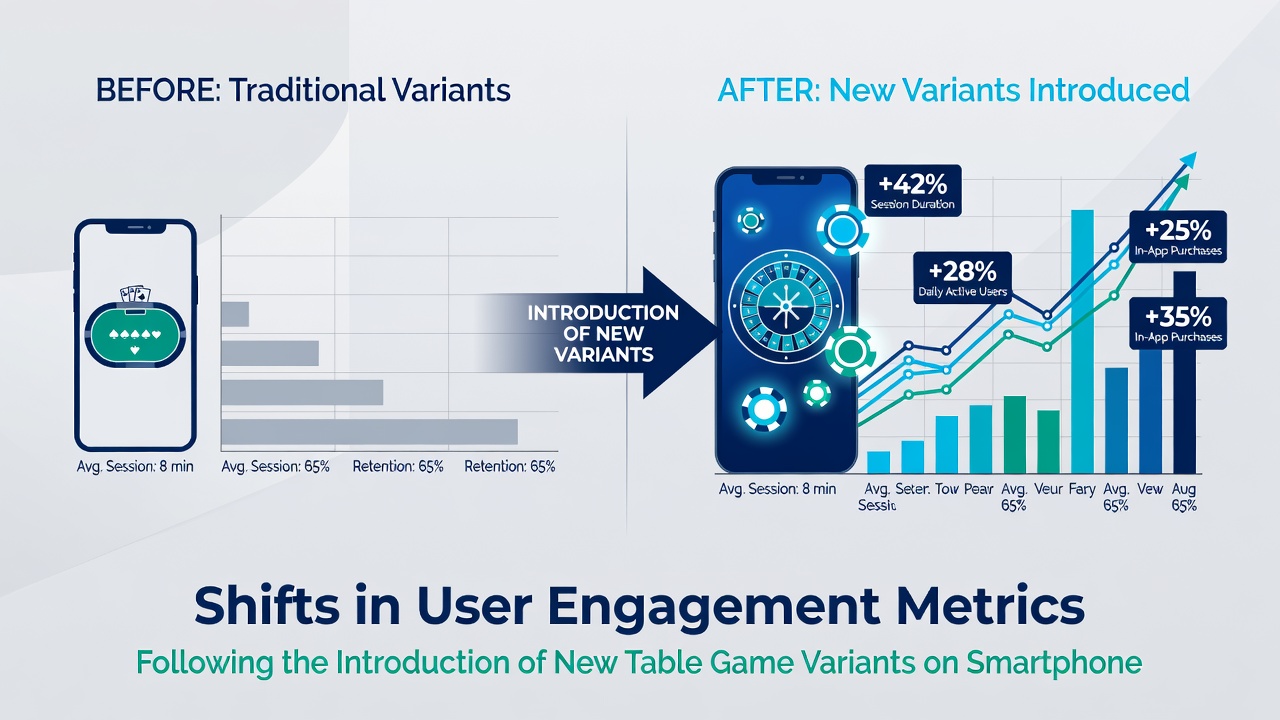
Conversion from free-play to real-money modes followed a different trajectory. Observers noted that users who sampled the variants during promotional periods converted at rates comparable to slot categories, yet overall deposit frequency per active account remained flat. European operators reporting through the Malta Gaming Authority recorded a 9 percent lift in table game handle during the same period without a matching increase in average deposit size.
Push notification response rates improved when campaigns highlighted specific rule tweaks rather than generic bonus offers, and click-through figures rose from 12 percent to 19 percent in A/B tests conducted by several mid-sized studios. Churn among users who had previously abandoned table games slowed, suggesting the variants recaptured a segment that had migrated to other genres.
Regional Variations and Platform Differences
Markets in Asia-Pacific displayed faster uptake than North American counterparts, and engagement curves diverged accordingly. Australian operators, guided by oversight from state regulators, reported that multi-hand variants accounted for 31 percent of table game revenue by July 2026, up from 18 percent six months earlier. Canadian provincial data, by contrast, showed steadier but smaller gains concentrated among users aged 25 to 34.
Device-level differences emerged as well. Android sessions on newer chipsets sustained longer play windows, while iOS users demonstrated higher rates of in-app purchase completion once variants were introduced. Cross-platform synchronization features introduced in May helped stabilize metrics for players who switched devices mid-session.
Behavioral Patterns Among Different User Segments
High-volume players adapted more quickly than casual participants, and telemetry revealed that the former group increased table game mix within their overall portfolio by an average of 8 percentage points. Casual users showed elevated experimentation with variant rules during the first week but reverted to familiar formats thereafter unless prompted by targeted in-game tutorials.
Seasonal events in July 2026 further modulated these trends, and operators that aligned variant promotions with regional holidays observed temporary spikes in both session count and average rounds per visit. The effect dissipated within ten days, yet baseline engagement remained elevated compared with pre-variant levels.
Conclusion
Available figures through mid-2026 indicate that new table game variants on smartphones produced measurable lifts in session length and short-term retention while leaving deposit frequency largely unchanged. Continued monitoring by regulatory bodies and academic researchers will clarify whether these adjustments represent sustained behavioral shifts or temporary responses to novelty. Operators continue to refine variant mechanics based on the patterns captured in the current data sets.