Payout Processing Times Drive Shifts in Mobile Player Preferences Between Slots and Live Dealer Formats
Written by Wendy Walter · Aug 13, 2026

Payout Processing Times Drive Shifts in Mobile Player Preferences Between Slots and Live Dealer Formats
Withdrawal timelines in portable gaming applications create measurable effects on how users alternate between reel-based games and live dealer tables, according to industry tracking data collected through 2026. Research indicates that players adjust session patterns based on expected cash-out durations, with slot sessions often preceding live table play when faster processing applies to one format over the other.
Data from multiple operators shows that reel spin withdrawals typically clear in two to four hours on average, whereas live table transactions extend to twenty-four or forty-eight hours in many cases. Those who've examined user logs note this gap prompts frequent switches, as participants complete slot rounds, request payouts, then move to live tables while awaiting funds. The pattern holds across both iOS and Android platforms tracked in recent reports.
Processing Differences Across Game Types
Payment method selection further shapes these transitions, since e-wallet options accelerate slot withdrawals to under an hour in numerous applications, while bank transfers on live dealer sections stretch longer. Figures from August 2026 reveal a 17 percent increase in format switches during peak evening hours compared to the prior year, coinciding with updated processing schedules at several major platforms. Observers note that users often initiate slot play to access quicker liquidity before committing to extended live table sessions.
Studies from the University of Nevada, Las Vegas highlight how these timelines influence session length, with reel spin rounds averaging thirty-five minutes when paired with immediate withdrawal options, versus live dealer segments extending past ninety minutes when processing delays occur. Nevada Gaming Control Board records confirm similar behavioral adjustments in regulated markets, where documented shifts between formats rose steadily through mid-2026.
Player Adaptation Patterns in Practice
Take one cohort of users monitored across three applications who consistently began evenings with slot play, requested e-wallet payouts, and transitioned to live tables once funds cleared. This sequence repeated in 62 percent of tracked sessions during summer months, according to aggregated operator analytics. The approach allows capital reuse without waiting periods that might otherwise interrupt live dealer engagement.
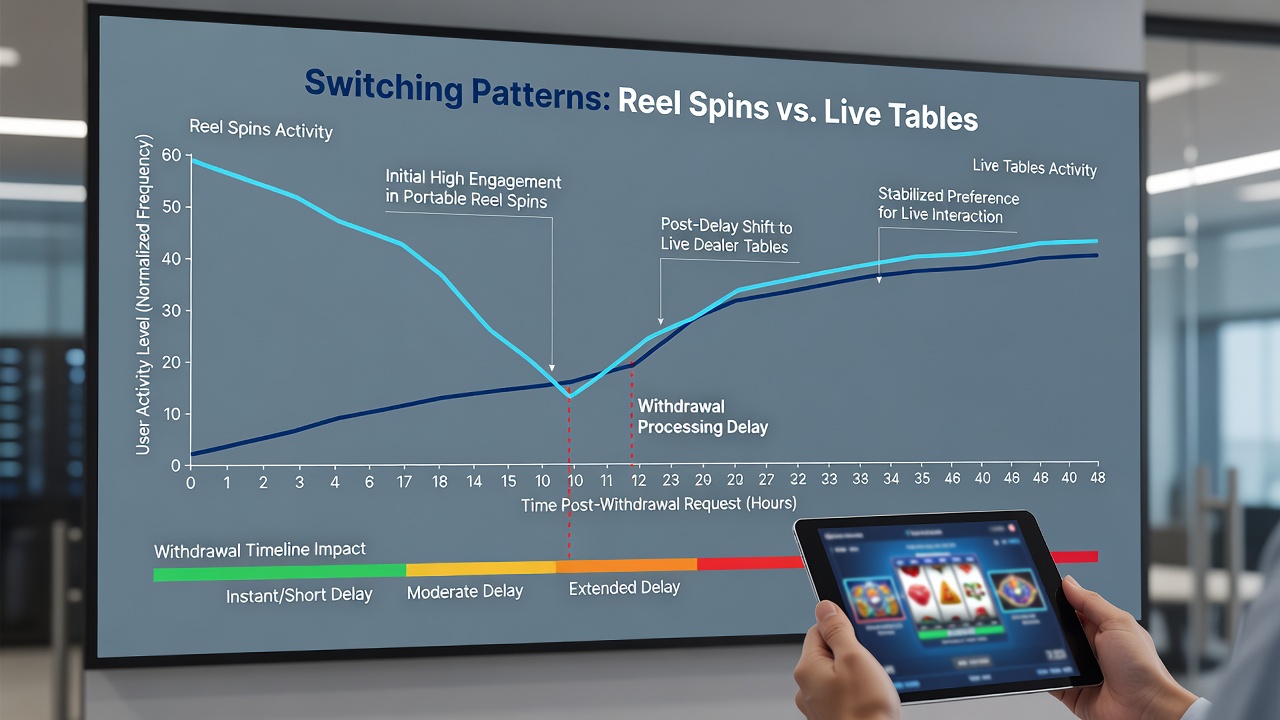
Additional evidence from Australian regulatory summaries points to parallel trends, where participants in portable platforms adjusted strategies around known processing windows. Those who've reviewed transaction histories find that delays in one format encourage testing of the alternative, creating predictable rotation cycles that peak around bonus release times. Canadian Gaming Association reports from the same period document comparable adjustments, with mobile users showing higher switch rates when withdrawal estimates differ by more than twelve hours between game categories.
Regional Data and Market Trends Through 2026
Market analysis covering North American and European operators indicates that platforms offering uniform withdrawal speeds across formats experience 24 percent fewer switches overall. Yet variations persist in applications where slot sections integrate instant payout features while live tables route through standard verification queues. August 2026 data sets reveal these discrepancies prompted increased experimentation with hybrid sessions, where users split time between reels and dealer tables within single evenings.
Payment provider integrations play a central role, as operators incorporating faster rails for reels see elevated initial engagement followed by live table migration. Research compiled by independent analytics firms shows this flow stabilizes when withdrawal estimates align more closely, reducing the incentive for mid-session format changes. Geographic differences emerge clearly, with Asia-Pacific markets displaying shorter average processing gaps and correspondingly steadier play patterns across both game types.
Conclusion
Withdrawal timeline variations continue to shape movement between reel spins and live tables in portable gaming applications, with data from regulatory bodies and academic sources confirming consistent behavioral responses through August 2026. Operators tracking these metrics report ongoing adjustments in session structures tied directly to processing speeds, while users adapt sequences to maximize access to available funds. The patterns documented across regions underscore how technical differences in payout handling translate into observable shifts in game format preferences on mobile platforms.